
Written by Ikra Mony, founder of ElectriFinds · Last updated: November 9, 2026
Active vs passive noise cancellation sounds like a spec-sheet detail, but it decides whether a flight feels calm or exhausting, and whether you are paying for electronics you do not need. Many shoppers assume “noise cancelling” is one feature. It is really two different methods, and the gap between them explains why a $100 pair and a $450 pair can behave so differently on a plane. This guide breaks down passive vs active noise cancellation in plain English, so you can choose based on where you listen, not on marketing.
Affiliate disclosure: Some links on ElectriFinds are affiliate links. If you buy through them, we may receive a small commission, and the price you pay stays the same. Commissions do not decide what we recommend. This guide is built from manufacturer specifications and published expert sources. ElectriFinds did not run hands-on or lab tests for this article.
Table of Contents
What Is the Difference Between Active Noise Cancellation and Passive Noise Cancellation?
Active noise cancellation (ANC) works by picking up outside sound with built-in microphones and playing back an inverted signal that cancels it out, which is most effective on steady, low-pitched noise such as engine drone. Passive noise cancellation uses physical barriers, such as ear cushions and ear tips, to block sound without power. Most good headphones combine both.
What Active Noise Cancellation Means and How ANC Works
Active noise cancellation means the headphones or earbuds fight sound with sound. Small microphones listen to the noise around you. A processor then generates an inverted version of that noise, often called anti-noise, and plays it through the speaker alongside your music. When the two waves meet at your eardrum, they partly cancel each other out. Engineers call this destructive interference. You may also see the term active noise reduction (ANR), which Digital Trends notes is the same feature under a different label.
Three practical points follow from how this works:
- It works best on steady, low-frequency sound. Sennheiser’s support documentation says ANC is most effective against low-frequency noise such as engine hum and air conditioning, and that voices are harder to cancel. A droning cabin is an ideal target. A chatty coworker is not.
- It needs power. ANC runs on a battery, which is why rated battery life usually drops when it is switched on. Sony’s published figures for the WH-1000XM6, for example, are up to 30 hours with noise cancelling on and up to 40 hours with it off.
- It cannot fix a poor fit. Electronic Design, in an article by a Cirrus Logic product manager, describes total cancellation as passive isolation plus active cancellation, and notes that even strong electronics cannot make up for weak acoustic design.
Active Noise Cancellation vs Passive Noise Cancellation vs Adaptive Noise Cancellation
Adaptive noise cancellation is not a third method. It is a smarter version of the active kind. Older ANC used fixed filters tuned for an average ear and an average environment. Adaptive systems adjust as conditions change, for example when the headphones sit differently on your head or the background noise shifts. Sony’s WH-1000XM6 specifications list an auto NC optimizer and atmospheric-pressure optimizing, which are examples of this approach.
For a buyer, the takeaway is simple: adaptive is a refinement of ANC, not a replacement for a good seal. If a product advertises “adaptive,” you still need to check whether it also has a solid passive fit.
Passive Noise Cancellation Meaning: How Physical Sound Blocking Works
Passive noise cancellation is the low-tech half of the story. It means physically stopping sound from reaching your ear canal. Earplugs, earmuffs, and your own hands over your ears are all passive. In headphones and earbuds, it is what you get the moment you put them on, before any power is involved, as Engadget puts it.
Passive isolation has a few defining traits:
- No battery, no processing. It works with wired and unpowered designs.
- Stronger at higher frequencies. Acentech, an acoustics consultancy, notes that this kind of attenuation tends to be more effective at higher frequencies, which complements ANC’s strength at lower ones.
- Entirely dependent on fit. Engadget points out that some glasses wearers lose the seal of over-ear cups because the frame arms break it, which weakens both passive isolation and the ANC that relies on it.
Active Noise Cancellation vs Passive Noise Cancellation vs Sound Isolation
Sound isolation (also called noise isolation) and passive noise cancellation describe the same thing. The word “cancellation” is technically misleading for the passive kind, because nothing is cancelled. Sound is blocked. Engadget’s explainer makes the same distinction: passive blocks, ANC actually cancels.
This matters when you shop. A product marketed as “sound isolating,” such as Shure’s SE215 earphones, is relying on its physical design, and its retailer spec sheet lists active noise cancellation as “No.” SlashGear also warns that not every product sold as noise cancelling includes ANC. Always look for the letters ANC, or the phrase “active noise cancelling,” in the specifications.
Passive vs Active Noise Cancellation: What Each One Blocks
The fastest way to choose is to ask what you actually want to quiet down.
Where active noise cancellation helps most
- Airplane cabin hum and engine drone
- Train and bus rumble
- Air conditioners, fans, and refrigerator hum
Where passive isolation does more of the work
- Voices and office chatter
- Keyboard clatter and other sharp, quick sounds
- Broadband noise at mid and high frequencies
Sennheiser and several acoustics sources agree on this split: ANC is best on steady low-frequency noise, while sudden or high-pitched sounds, including speech, are harder for it to predict. Electronic Design adds that passive isolation often only does its job above roughly 1 kHz, which is exactly why the two methods are complementary.
The practical conclusion is an original one worth remembering: in a noisy open office, a well-sealed pair with modest ANC can beat a more expensive pair with a poor seal, because the sounds you want gone are largely the ones passive isolation handles best.
Suggested visual: create your own simple diagram showing a sealed ear tip plus ANC microphones. Image alt text: “Active vs passive noise cancelling working together: ear-tip seal plus anti-noise from ANC microphones.”
Active Noise Cancellation vs Passive Noise Cancellation: Key Differences
| Feature | Active (ANC) | Passive (sound isolation) |
| How it works | Microphones and a processor create anti-noise | Physical barriers such as pads, ear tips and closed earcups |
| Needs power | Yes | No |
| Strongest against | Steady, low-frequency noise (engines, hum) | Mid and high-frequency noise, including voices |
| Weakest against | Sudden, high-pitched sounds and speech | Low-frequency rumble |
| Depends on fit | Yes, a poor seal reduces ANC performance | Yes, entirely |
| Battery impact | Reduces rated battery life | None |
| Typical trade-offs | Higher cost, possible “pressure” sensation, faint hiss on some models | Tight fit can be less comfortable; limited bass-noise reduction |
Sources for this table: Sennheiser support, Engadget, Electronic Design, and manufacturer battery ratings (see Sources).
Active vs Passive Noise Cancellation Headphones: What Over-Ear Buyers Should Know
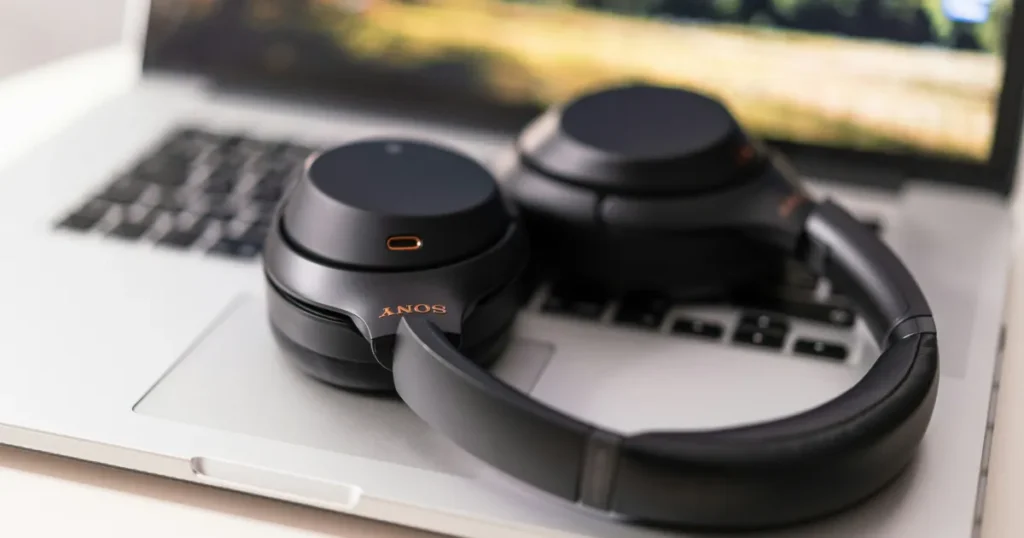
Over-ear headphones have the most room to do both jobs well. Large cushions create a passive seal around the ear, and the larger earcups leave space for ANC microphones and electronics. My New Microphone notes that closed-back, over-ear designs provide the best passive isolation when fitted correctly, and that this same form factor is common in ANC models.
What to check before buying:
- Pad seal and clamp force. A firmer clamp can improve isolation but may tire you on long flights.
- Closed-back vs open-back. Closed-back designs isolate. Open-back designs are built to let sound pass through, so they are poor choices for noisy places.
- Glasses. If you wear them, look for reviews that mention seal quality.
- Battery life with ANC on. Manufacturers quote different numbers with ANC on and off, so compare the “ANC on” figure.
Passive Noise Cancelling Headphones
Passive noise cancelling headphones are simply well-built, closed-back headphones with no active circuitry. Their appeal is reliability: nothing to charge, no pressure sensation, and no battery fade. Their limitation is low-frequency noise. You will still feel a plane’s engine rumble more than you would with ANC. They make the most sense for desk use, studio monitoring, and anyone who wants a wired setup.
Active and Passive Noise Cancellation Earbuds: Why the Seal Matters Most
Earbuds depend even more on passive isolation, because the ear tip is the barrier. Sennheiser’s support guidance on true wireless earbuds says a good seal from the ear tips helps ANC performance. Two practical consequences:
- Ear tip size is a performance setting, not a comfort detail. If an earbud feels loose, try the next size before judging the ANC.
- Foam tips usually isolate better than silicone. Engadget’s review of the AirPods Pro 3 says foam ear tips generally offer better passive isolation than silicone ones. Foam can feel different at first and may need a short adjustment period.
Earbud ANC has to work in a much smaller space, so check the specific model’s fit options and reviews rather than assuming earbuds and over-ear headphones will cancel equally.
Active vs Passive Noise Cancellation Examples
Examples make the difference concrete. These are everyday and product examples, using published manufacturer specifications.
Everyday passive examples: foam earplugs, earmuffs, closed-back headphones with the power off.
Everyday active example: a pair of ANC earbuds reducing steady cabin noise on a flight.
| Product | Type | What the manufacturer says | Limitation to know |
| Sony WH-1000XM6 (over-ear) | Active plus passive | HD Noise Cancelling Processor QN3 with 12 microphones; up to 30 hours of playback with noise cancelling on (Sony specs, via Engadget) | Premium price: it launched at about $450 in the US, so check current pricing |
| Apple AirPods Pro 3 (earbuds) | Active plus passive | Up to 2x more noise removed than AirPods Pro 2; foam-infused ear tips in five sizes for greater passive isolation; up to 8 hours with ANC on (Apple) | Engadget notes the new fit takes some getting used to |
| Shure SE215 (wired earphones) | Passive only | Sound-isolating design that blocks up to 37 dB of outside noise, according to Shure listings; ANC listed as “No” | No ANC, so low-frequency rumble is reduced less; some retailer listings mark the original model as discontinued, so verify availability |
The interesting lesson is in the Apple example. Apple credits its foam tips, a passive improvement, as part of why its ANC works better. That is the two methods cooperating in a single product.
Active Noise Cancellation vs Passive Noise Cancellation: Which Is Better? (By Use Case)
Neither wins everywhere. This is an editorial view based on how each method works, not a test result.
- Frequent flyers and long train commuters: choose ANC with a good seal. Steady low-frequency noise is exactly what ANC handles best.
- Open offices and shared apartments: prioritize fit and passive isolation first, then ANC. Voices are the hardest sound for ANC to remove.
- Gym and running: a secure passive fit usually matters more than strong ANC, and you may want to hear traffic or announcements.
- Studio, stage, and desk use: passive isolation is often enough, and wired models avoid battery concerns.
- Walking in busy streets: use ANC carefully and consider a transparency or ambient mode so you can still hear vehicles.
- Tight budgets: when comparing active noise cancelling vs passive isolation at a low price, a well-fitted passive design with foam tips can outperform a weak ANC model that fits poorly.
If you want specific models, see our guide to Best Noise Cancelling Headphones Under $200: Picks by Use Case.
Frequently Asked Questions
Is passive or active noise cancelling better?
Neither is better in every situation. ANC is better against steady low-frequency noise like engines, while passive isolation handles higher-frequency sound and is the foundation ANC builds on. For most people, the best result comes from headphones that do both well.
Which one is better, ANC or ENC?
They do different jobs. ANC reduces the noise you hear, while ENC (environmental noise cancellation) cleans up your voice so the other person hears you more clearly on calls, according to SlashGear and Xiaomi’s support page. Choose ANC for listening, ENC for calls, and look for products that offer both.
Which type of ANC is best?
Feedforward ANC places microphones outside the earcup, while feedback ANC places them inside to hear what actually reaches your ear. Hybrid ANC uses both and is generally described as the most effective, according to Electronic Design. Most premium consumer models use hybrid systems, so check the spec sheet.
Is ANC healthy for ears?
ANC itself is not known to damage hearing. The main risk with any headphones is volume and listening time. ANC can help because you may not need to turn the volume up to overcome background noise, but audiologist Dr. Rachel Artsma of Hear.com told TechRadar that volume control is still the key factor and that ANC alone is only half the equation. She also said the pressure feeling some people notice is usually a perception, not real pressure.
The CDC’s NIOSH recommends limiting exposure to 85 A-weighted decibels averaged over eight hours, and cutting the allowed time in half for every 3 dBA increase. If you feel pain, ringing, dizziness, or muffled hearing, stop using them and see a hearing professional. This is general information, not medical advice.
Does ANC affect sound quality?
It can, but results vary by model. Some ANC circuits add a faint high-frequency hiss, as Science ABC notes about older Bose headphones, though well-implemented systems keep it below audible levels. On the positive side, quieter surroundings let you hear detail at lower volume. Check independent reviews and measurements for the specific model you want.
Is 100% noise cancellation possible?
No. SlashGear states that complete silence isn’t possible, and ANC works least well on voices and sudden sounds. Expect noise to be reduced, not erased.
Conclusion: Which Should You Choose?
The main lesson of active vs passive noise cancelling is that they are partners, not rivals. ANC targets steady low-frequency noise such as engines and hum. Passive isolation handles higher-frequency sound and decides how well ANC can work in the first place. For travel and commuting, prioritize ANC plus a secure seal. For offices, gyms, and tight budgets, start with fit and passive isolation. Before you buy, check three things on the spec sheet: whether ANC is actually included, the battery life with ANC on, and whether the ear tips or pads give you a good seal.
Sources and Methodology
This article compares manufacturer specifications with published expert and standards sources. Prices, battery ratings, and availability change, so confirm them on the retailer or manufacturer page before buying.
- Engadget, “What’s the difference between active noise canceling and passive?” https://engadget.com/2212816/difference-between-active-noice-canceling-passive-explained
- Engadget, “Sony’s flagship WH-1000XM6 headphones arrive with updated sound and more robust ANC” https://www.engadget.com/audio/headphones/sonys-flagship-wh-1000xm6-headphones-arrive-with-updated-sound-and-more-robust-anc-160005817.html
- Engadget, “AirPods Pro 3 review” https://www.engadget.com/audio/headphones/airpods-pro-3-review-a-significant-update-to-apples-best-earbuds-120028170.html
- Apple Newsroom, “Introducing AirPods Pro 3” https://www.apple.com/newsroom/2025/09/introducing-airpods-pro-3-the-ultimate-audio-experience/
- Sennheiser Support, “What impacts ANC performance on true wireless headphones” https://support.sennheiser-hearing.com/hc/en-at/articles/34973170917021-What-impacts-ANC-Active-Noise-Cancellation-performance-on-True-Wireless-headphones
- Electronic Design, “What’s the difference between passive and active noise cancellation?” https://www.electronicdesign.com/industrial-automation/what-s-difference-between-passive-and-active-noise-cancellation
- Acentech, noise control reference https://www.acentech.com/?p=15966
- My New Microphone, “Passive vs. active noise-cancelling headphones” https://mynewmicrophone.com/?p=12806
- SlashGear, “ANC vs ENC noise cancellation: the pros and cons of each” https://www.slashgear.com/1988625/anc-vs-enc-noise-cancellation-pros-cons
- Xiaomi Support, “What are the noise cancellation technologies of the REDMI Buds 6?” https://www.mi.com/global/support/faq/details/KA-512817/
- TechRadar, interview with Dr. Rachel Artsma (Hear.com) on ANC and hearing health https://www.techradar.com/audio/earbuds-airpods/i-asked-a-lead-audiologist-whether-or-not-our-headphones-are-damaging-our-hearing-and-she-told-me-that-anc-and-volume-control-is-only-half-the-equation-heres-why-regular-breaks-are-vital-to-avoid-flattening-your-tiny-hair-cells-for-good
- CDC / NIOSH, “Noise-Induced Hearing Loss” https://www.cdc.gov/niosh/noise/about/noise.html
- Science ABC, “Why are noise-canceling headphones less effective at blocking high-pitched sounds?” https://www.scienceabc.com/innovation/why-are-noise-canceling-headphones-less-effective-at-blocking-high-pitched-sounds
- B&H Photo, Shure SE215 specifications https://www.bhphotovideo.com/c/product/803494313-USE/shure_se215_cl_se215_pro_sound_isolating_earphones.html/overview
Reviews & Ratings
Share your thoughts about this guide and help other readers.
Write a Review
Select your rating and tell us what you think.
Reader Reviews (0)
No reviews yet. Be the first to share your thoughts!